

Hard-chrome plate grill: when it matters and which menus benefit
Hard-chrome or cast iron? From smashburgers to crêpes, fine-dining steak to breakfast service — surface, heat distribution and cost differences.
Plate selection isn't as simple as it looks
Most operators decide on plate-grill surface material last. Yet the most common complaint we see in the field — "the steak sticks", "oil seeps into the slab", "we need half an hour to bring it up before every service" — almost always traces back to the wrong surface choice.
There are two main options: cast-iron plate and hard-chrome plated plate. Both sit on a steel body — the difference is the top layer.
Cast iron: classic character
A cast-iron plate is a thick steel slab, machined and seasoned. The surface has a micro-porous structure that absorbs oil over time and becomes seasoned. In our experience, cast iron:
- Holds heat for a long time — once at 250°C it stays through service
- Gives an aggressive Maillard reaction; steak crust comes out darker, more carbonised
- Ribbed (grooved) version leaves grill marks — preferred in fine-dining steakhouses
- Sticking risk is high; greasing before service and deglazing after is mandatory
The downside is cleaning. Micro-pores reject detergent — only a scraper and hot water. Wrong cleaning (steel wool, acidic detergent) destroys the seasoning and the surface rusts within months.
Hard-chrome: the professional line standard
A hard-chrome plate is a cast surface coated with 20-25 microns of hard chrome. Same steel thickness underneath, but the top layer is smooth, non-porous and very low-friction.
Field differences:
- Sticking is virtually zero — even smashburger buns release cleanly from the patty
- Heat distribution is 15-20% more uniform, because chrome conducts heat laterally
- Cleaning is one motion — deglaze, wet cloth, done
- Surface stays stain-free; dark patty sears stay visible, crêpe gets even colour
The real power of hard-chrome shows in back-to-back service. In a 200-smashburger flow, cast iron starts sticking at hour 4; chrome leaves clean marks even at hour 8.
Which plate for which menu?
The decision matrix from the field:
Smashburger / breakfast / crêpe: hard-chrome High volume, fast turnover, low fat. For smashburgers, surface smoothness controls the smash footprint; for crêpe batter, non-stick is mandatory. In a 200-egg breakfast shift, chrome is non-negotiable.
Fine-dining steak / ribbed grill: cast iron For tomahawk or kofte, the carbonised mark from a ribbed cast plate is unmatched by chrome. **Low-volume, high-value** menus still belong to cast iron.
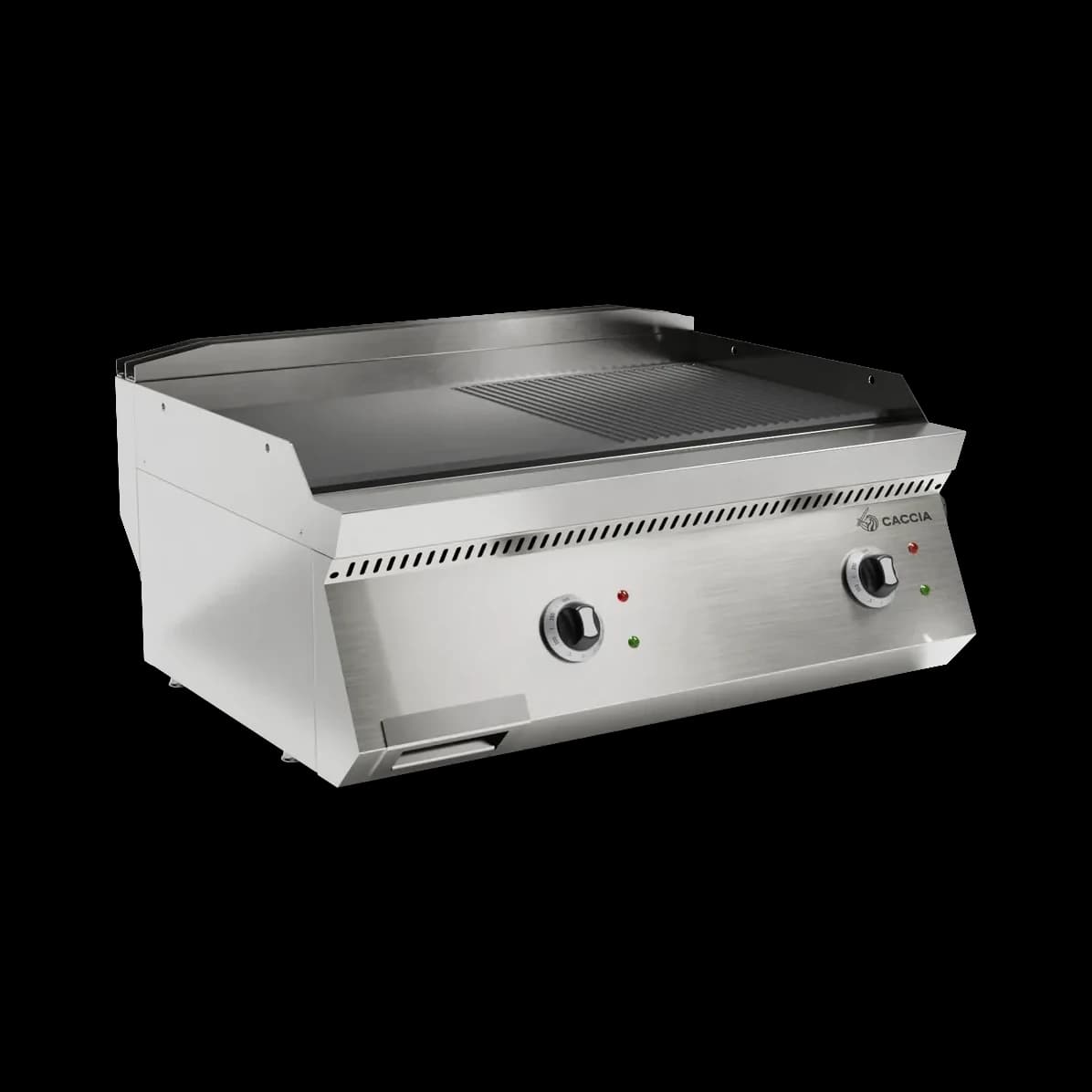
Mixed menu (burger + steak + breakfast): split top On 800 mm and larger plates we recommend **half chrome + half ribbed cast**. Two zones, two thermostats — smashburger on the left, steak on the right.
Catering / banquet: hard-chrome In catering, equipment gets used by chefs who don't know it. Hard-chrome **forgives** — even if greasing is skipped, the surface holds for hours.
Surface heat distribution: real numbers
Thermal-camera readings on the same 800 × 600 mm plate:
- Cast iron: centre 245°C, edge 215°C — delta 30°C
- Hard-chrome: centre 240°C, edge 228°C — delta 12°C
That 18°C edge delta translates to 25% longer cook time for a patty at the edge. On busy lines this doesn't just affect minutes — it hits ticket time directly.
Lifespan and cost
Investment delta on our production line is around 18-22% — a cast-iron plate at 100,000 TL is 118-122,000 TL in hard-chrome. Lifespan:
- Cast iron: with proper care 8-10 years; with poor care 3 years
- Hard-chrome: until the chrome layer wears, 10-12 years; most operators don't replace before year 7
On a cost-per-minute basis, hard-chrome works out 15% cheaper long-term — shorter service, less oil, 40% less cleaning labour.
Conclusion
- Smashburger, breakfast, crêpe, volume ops → hard-chrome
- Fine-dining steak, grill marks, classic character → cast iron
- Mixed menu → split top (half chrome + half ribbed)
The plate is roughly a 10-year decision for the cook line. Our suggestion: share your menu and daily cover count, and we'll spec the right top configuration from our production floor.