

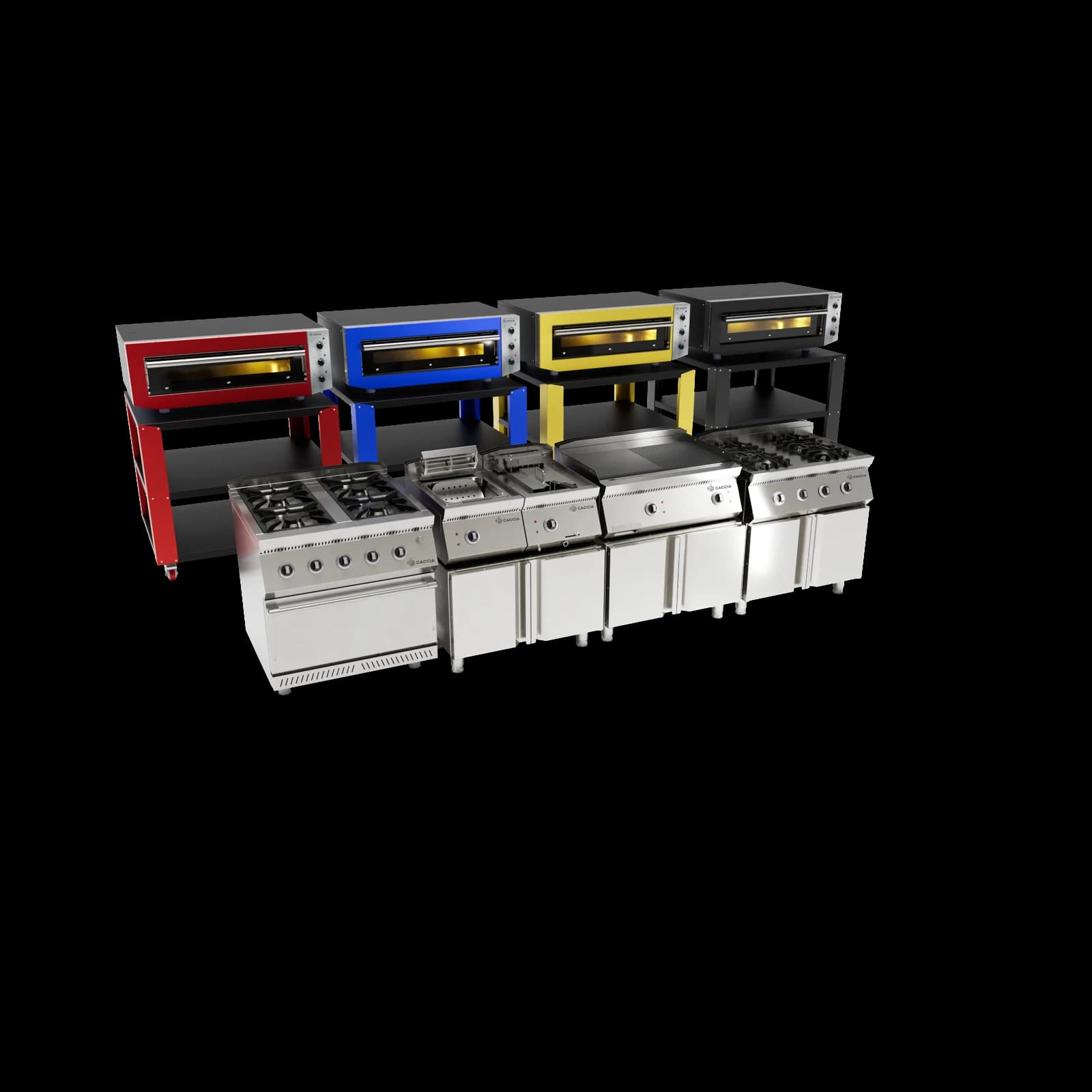
Industrial-kitchen hood sizing — why veterans say 'eyeballing doesn't work'
Fuel capacity × coefficient method, plenum differences by equipment type, make-up air and TS EN 16282 reference. The fundamentals of hood engineering.
"Eyeballing it" is the most expensive method
Two hood mistakes we see most in the field:
1. "2 m × 1 m should be enough for this kitchen" — eyeballed 2. "We'll reuse the hood from the old kitchen" — cross-kitchen recycling
Both end up the same: peak service, kitchen air stagnates, heat won't pull, oil drips from the hood. The operator usually says "spin the fan faster" — and then kitchen pressure drops, doors won't open, burners don't burn cleanly.
A hood needs engineering math. This post shares the field formula and TS EN 16282 reference.
Base formula: fuel capacity × coefficient
Exhaust capacity (m³/h):
Exhaust = Σ (Equipment kW × Equipment coefficient) × Draw factor
Equipment coefficients (m³/h per kW)
Each equipment type has a different emission character:
- Pizza oven (gas): 30 m³/h per kW (high heat, low grease)
- Pizza oven (electric): 20 m³/h per kW
- Range (gas): 35 m³/h per kW (combustion gas + vapour)
- Plate grill: 40 m³/h per kW (grease + vapour)
- Fryer: 50 m³/h per kW (highest grease emission)
- Convection oven: 25 m³/h per kW
- Steamer: 30 m³/h per kW (steam-heavy)
- Range stove (multi-zone): 35-40 m³/h per kW
Draw factor
Based on plenum type and line geometry:
- Slot-type plenum: 1.0
- Baffle filter: 1.1
- Corner-mounted hood: 1.2 (sidewall losses)
- Island hood: 1.3 (four sides open, high loss)
Worked example
5 m line, restaurant kitchen: - 4-burner gas range: 28 kW → 28 × 35 = 980 m³/h - 800 mm plate grill: 18 kW → 18 × 40 = 720 m³/h - Twin-tank fryer: 20 kW → 20 × 50 = 1000 m³/h - Convection oven: 12 kW → 12 × 25 = 300 m³/h
Total: 3000 m³/h × 1.1 (baffle filter) = 3300 m³/h exhaust
Spec a 3500 m³/h hood (about 5% buffer).
Equipment type → plenum type
The plenum under the hood is also part of the design:
High heat, low grease (pizza oven, convection) **Slot plenum** suffices. No grease vapour, just hot air. Filter optional.
High grease (fryer, plate, range) **Baffle filter** mandatory. Condenses grease, channels to drain. Non-negotiable for annual fire-safety inspection.
Steam cooking (steamer, pasta cooker) **Water-drained plenum** — channels condensate out the side. Without it, the hood drips.
If one hood covers mixed equipment, design zoned plenums: slot over pizza, baffle over fryer, water-drain over steamer. One hood visually, three zones underneath.
Make-up air: the forgotten half
Most operators size the exhaust but forget make-up air. Result:
- Kitchen goes under pressure
- Dining-room door won't open on its own
- Hood "chokes" — fan runs but can't pull
- Back-drafts and odours from toilets and drains
Make-up air rule: about 80-85% of exhaust as supply. For the example above: 3300 × 0.82 = 2700 m³/h make-up air.
Two methods:
1. Standalone make-up air fan — fresh air from roof/façade, side-blown to hood 2. Compensated hood (integrated make-up air) — separate plenum at the hood face
Recommendation: for hoods over 2500 m³/h, use integrated make-up air. In hot, humid climates, supply must be conditioned (filtered + cooled).
TS EN 16282: reference standard
In Turkey, commercial-kitchen ventilation is governed by TS EN 16282, seven parts:
- Part 1: General requirements (air flow, pressure)
- Part 2: Exhaust air capacity calculation (the formula above)
- Part 3: Grease filters and aerosol separators
- Part 4: Make-up air and air distribution
- Part 5: Fire safety (damper, sprinkler)
- Part 6: Hood construction details
- Part 7: Maintenance and inspection intervals
CE-marked hoods are built to this standard. Every hood we design in the field is verified against TS EN 16282-2.
Common mistakes
What we see most:
- Hood smaller than equipment line — line is 5 m, hood is 4 m. Side-loss reaches 30%
- Single exhaust point — long lines pile air on one side, the other end can't pull
- Missing or undersized make-up air — correct on paper, fails in service
- Skipped grease-filter maintenance — uncleaned filters create fire risk
- Tying into the building HVAC — hood needs its own duct; shared duct carries kitchen odour to the dining room
Conclusion
A hood is not eyeballed equipment — it's the backbone of the kitchen's airflow. Correct sizing:
1. Sum kW × coefficient per equipment 2. Multiply by draw factor 3. Add 5-10% buffer 4. Plan make-up air at 80-85% 5. Verify TS EN 16282 compliance
Share your equipment list; we'll calculate hood + make-up air together. A wrong number costs five times the hood in annual energy + fire risk + service losses.