

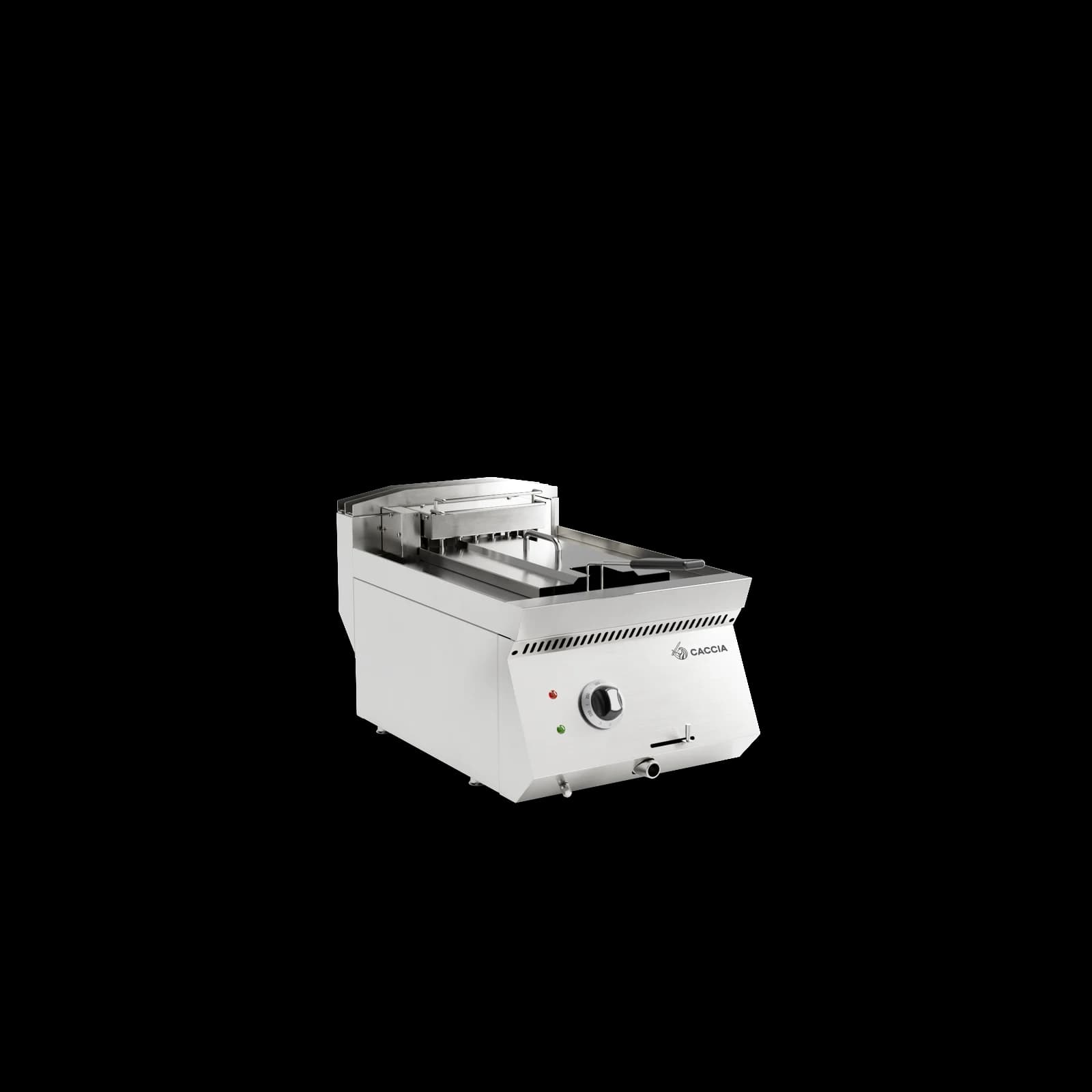
Fryer oil life: from 3 days to 7
Cool-zone design, filter routine, temperature control and contamination signals — field-tested protocols that double oil life.
Oil cost is invisible in most kitchens
Ask a manager about oil spend and you usually hear "we buy X cans a month" — almost never per-plate cost. In the field we see oil change frequency is a silent but big line item.
We've measured a typical mid-scale restaurant (80-100 fries + 30-40 wings per day):
- Poorly managed: oil change every 3 days → 10 changes/month
- Well managed: oil change every 7 days → 4 changes/month
That's 60% oil savings. Drops monthly oil from 8,000 TL to 3,200 TL. 57,000 TL a year.
How?
1. Cool zone: a design issue
The most critical feature of a good fryer is its cool zone — the region below the element or burner, where temperature stays 60-80°C.
Crumbs, flour, breading pieces breaking off the product burn in the hot zone and oxidise the oil. With a cool zone, debris settles to the bottom, insulated from hot oil, doesn't burn. Less contamination, longer life.
Our fryers run an 80 mm cool zone; the floor drain valve empties only this sediment during daily cleaning.
A "cheap" cool-zone-free fryer cuts oil life in half. Over three years, the oil cost delta is twice the fryer's own price.
2. Daily filter routine
Cool zone alone isn't enough — daily filtering is mandatory. Close-of-service steps:
1. Switch off, let oil drop below 120°C (about 20 min) 2. Pull baskets, isolate heat source 3. Open drain valve, empty oil into the filter pan (stainless mesh + filter paper) 4. Wipe tank inside with damp cloth; scrape carbonised debris 5. Pour filtered oil back 6. Top up to 5% above max line (evaporation buffer)
12-15 minutes. Kitchens applying this daily see oil hit 5-7 days. Those skipping see 2-3.
3. Temperature control: 180°C critical threshold
Fryer oil oxidises rapidly above 180°C. At 190°C oxidation doubles; at 200°C, quadruples.
Correct setpoints in the field:
- French fries: 175-180°C
- Wings / chicken nuggets: 170-175°C
- Vegetable tempura: 165-170°C
- Donut / churros: 175-180°C
- Falafel: 170-175°C
Chefs often crank to 200°C "to cook faster". That halves oil life and adds a carbonised taste. Quality comes from right temp + right time, not higher temp.
Verify thermostat accuracy every 3 months with an IR thermometer. ±5°C drift → calibrate or replace.
4. Contaminants: salt and flour
Two contaminants halve oil life directly:
Salt Salt acts as an **oxidation catalyst**. Salt fries **after pulling** from the basket, never while they're in. Shake marinade off wings if salt-heavy.
Flour / starch dust Flour crumbs burn in the hot zone and darken the oil. Shake **excess flour off** dredged products (wings, fish) before they hit the oil.
Practical test: check oil colour after every service. Light gold → fine, dark brown → change signal.
5. Oil-change signals
Four signals indicate full replacement:
1. Colour: light gold turned dark brown → change 2. Foaming: persistent 2 cm of foam above the product → change 3. Smoke: continuous cigarette-style smoke at 180°C → change 4. Smell: rancid fish odour from the tank even off-service → change
Pro kitchens use TPM (Total Polar Materials) test strips. Over 24-25% TPM → full change (regulatory requirement in Turkey).
6. Separation: fry + dredged products
One fryer doing two jobs shortens oil life. Field recommendation:
- Twin-tank fryer — one for fries/clean items, one for wings/dredged
- No cross use — fry-side stays neutral, wing-side carries marinade
If you only have a single-tank fryer, sequence within the day: clean first (fries), dredged later (wings). If change time falls at day-end anyway, no harm done.
Conclusion: routine = cost
Pushing oil life from 3 to 7 days isn't an equipment upgrade — it's routine discipline:
- Pick a cool-zone fryer
- Daily filter + tank wipe
- Stay in correct temp window
- Block salt and flour contaminants
- Read colour + foam + smoke + smell signals
- Separate tanks when possible
A kitchen running this discipline saves 30-60k TL/year and pays the fryer back within a year.