

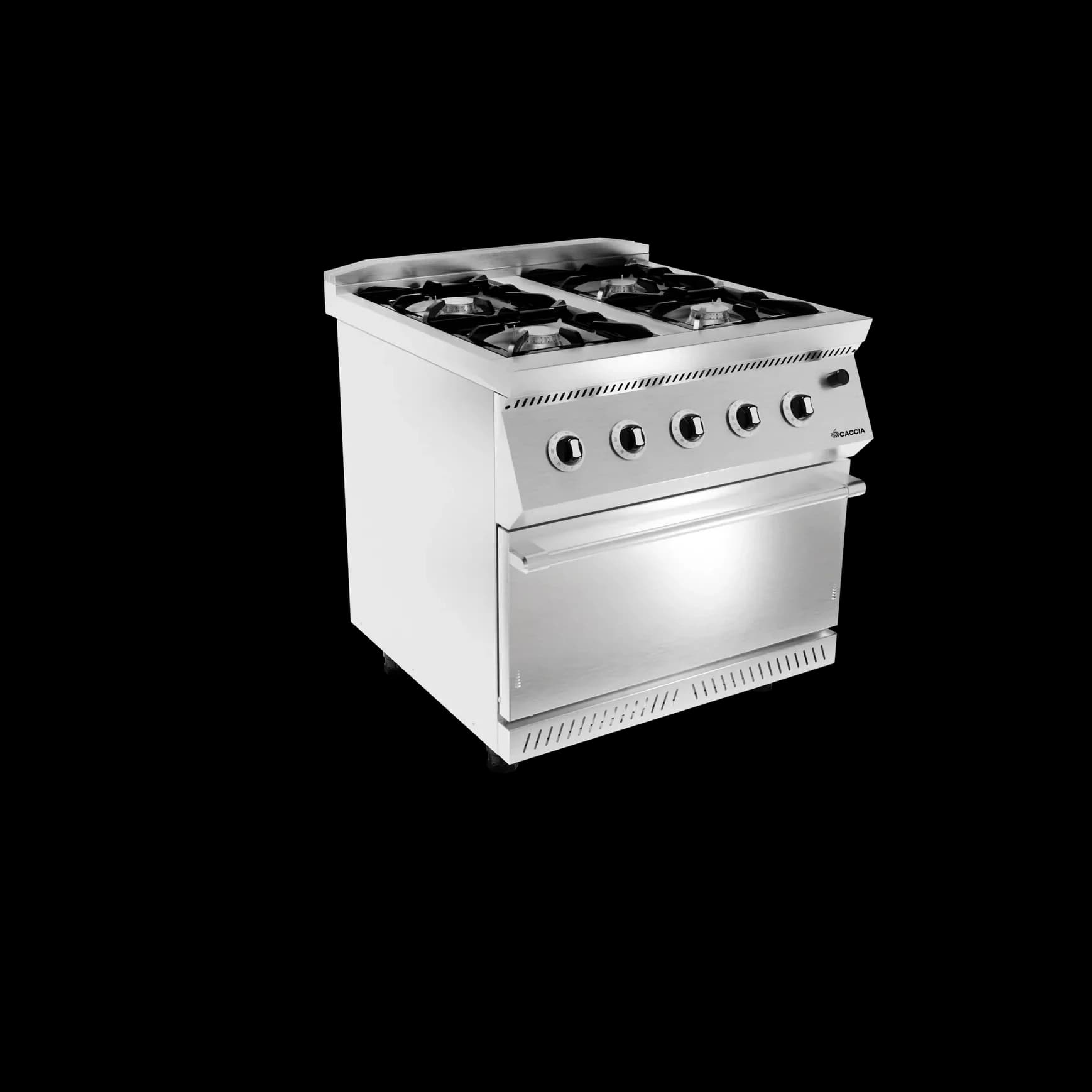
Gas vs electric range: running cost, control, line design
From flame control to hood size, kWh and gas pricing to line flexibility — the real differences between the two fuels.
"Which is cheaper?" is the wrong question
Every operator setting up a new kitchen asks this: "Gas or electric, which is cheaper?" The honest answer is — it depends. But "it depends" needs unpacking: fuel price isn't the only variable. Control character, hood size and kitchen flexibility usually outweigh raw fuel cost.
This post breaks down each fuel's character, the practical differences we see in the field, and which fuel suits which kitchen.
Gas range: instant power, traditional character
A gas burner works unlike an electric dial: cut the fuel and the flame is out, raise the fuel and power scales immediately. In the field this means:
- Instant response — mandatory for wok, sauté, flambé
- Visual feedback — flame colour and height let the chef read power by eye
- Full capacity available in seconds — peak service rhythm holds
Traditional Turkish, Italian and Asian kitchens are unthinkable without gas. We see this every time on kebab houses, ocakbaşı concepts and wok-heavy Asian restaurants.
Drawbacks:
- Combustion efficiency is low — 35-45% of fuel becomes useful heat, the rest leaves via hood
- Larger hood volume — combustion gases + heat + grease vapour all need to be exhausted
- Gas line infrastructure — DN20/DN25 piping, regulator, gas detector, fire damper required
- Certification and inspection — annual burner service, utility/EPDK compliance
Electric range: stable temperature, quiet line
Electric (especially induction) has a different character: no fuel, no flame, just heat.
- Temperature control ±2°C — ideal for sous-vide prep, chocolate tempering, sauce cooking
- 85-90% efficiency — nearly all electricity becomes heat
- Quiet — no burner hiss, no flame noise; preferred in open-kitchen concepts
- Smaller hood — no combustion gas, only cooking vapour
We see electric most in patisseries, boutique bakeries, fine-dining cold stations and open-kitchen concepts.
Drawbacks:
- Slow instant response — even induction doesn't hit gas speed for a sauté
- Pot compatibility (induction) — aluminium, copper, thin steel won't work
- Electrical panel load — 6-zone induction = 22-30 kW, 3-phase, 50A dedicated breaker
- Power-outage scenario — gas survives a cut, electric goes down
Operating cost comparison (proportional)
Absolute figures shift monthly. Proportionally in Turkey we measure:
- Kitchens with mains gas: gas cooking runs 20-30% cheaper
- LPG-only kitchens: electric and LPG are very close (LPG slightly higher)
- Distribution + standing fees: erode electric's edge; gas usually still ahead
But cost isn't just fuel. Add labour + cleaning + maintenance:
- Electric cleaning is 40% faster than gas
- Annual maintenance is half that of gas
- Fire risk on electric is near zero; gas needs damper, detector, annual service
All in, the total operating delta shrinks to 5-10%. Pure fuel-cost comparison is misleading.
Hood delta: practical impact
For the same 4-burner range:
- Gas: 1500 × 1100 mm hood, 3000 m³/h exhaust
- Electric: 1200 × 900 mm hood, 1800 m³/h exhaust
- Induction: 1000 × 800 mm hood, 1200 m³/h exhaust (some projects, make-up air only)
Induction's smaller hood doesn't just save floor space — it cuts ventilation infrastructure cost by about 40%. Inside shopping centres, that delta can be the line item that makes the project feasible.
Which kitchen, which fuel?
Choose gas - Kebab, ocakbaşı, wok, Asian, sauté-heavy menu - High volume, back-to-back service (100+ plates/hr peak) - Industrial kitchens with mains gas access - Traditional pizzeria (gas oven coherence)
Choose electric (or induction) - Patisserie, bakery, chocolate workshop - Open-kitchen boutique restaurant - Sous-vide-driven modern menu - Mall / enclosed venue restaurant (hood/ventilation constrained) - Hotel room-service kitchen (quietness matters)
Hybrid approach What we recommend most in practice: **hot line gas + cold/garde manger electric + pastry induction**. Match fuel to station character; don't break line ergonomics.
Conclusion
The gas vs electric decision is decided by kitchen character more than fuel price. Share your menu mix; we'll plan which station belongs on which fuel together.